About The Moghul Tomb
Humayun’s Tomb, the final resting place of Mughal Emperor Humayun in Delhi, India, was commissioned by his widow, Hamida Banu Begam, also known as Haji Begam, in 1569, fourteen years after he died in 1556. While there is no recorded evidence of Humayun’s involvement in planning the tomb, it is widely believed that he drew inspiration from Persian architecture during his exile. The construction, costing 15 lakh rupees (1.5 million), employed Mirak Mirza Ghiyath, a Persian architect.
The tomb, situated within a square garden, surrounds four main parterres divided by causeways, with shallow water channels running through their centers. Two lofty double-storeyed gateways on the west and south grant access to the high rubble-built enclosure. An elaborate baradari (pavilion) adorns the center of the eastern wall, while a hammam (bath chamber) is situated in the center of the northern wall.
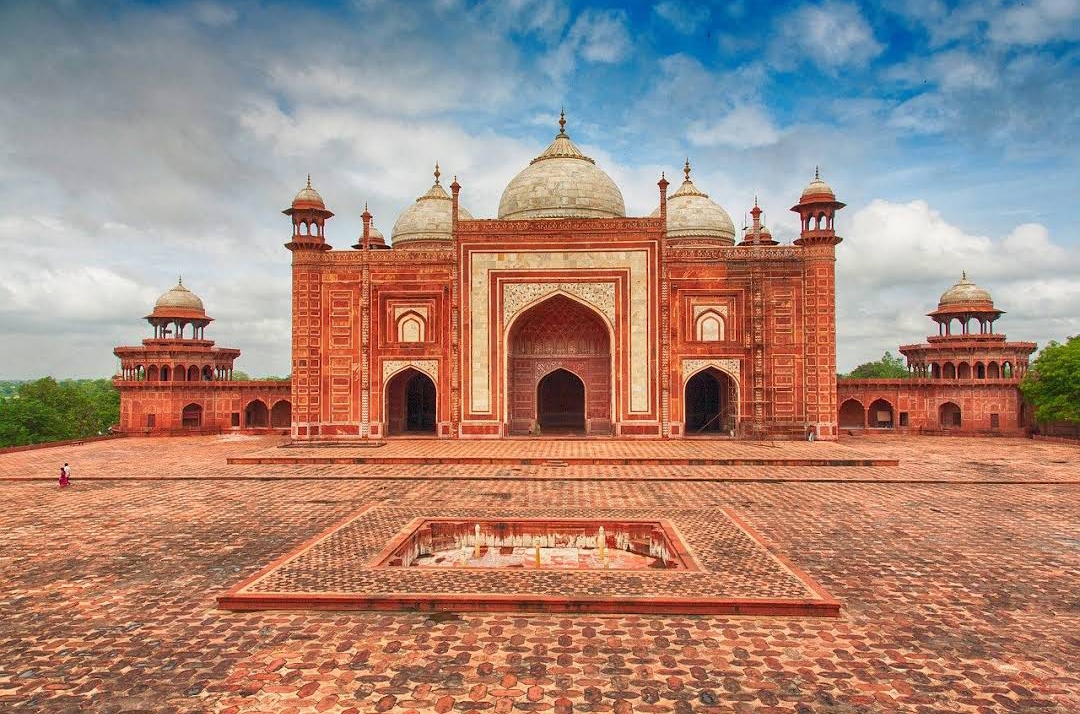
The square red sandstone mausoleum, with chamfered corners, rises from a 7-meter-high square terrace. Beneath this terrace lies a series of cells accessible through arches on each side, leading to the central chamber containing the cenotaph. Diagonal passages connect to corner chambers housing the graves of other royal family members. Externally, the tomb’s sides are adorned with marble borders and panels, with three arched alcoves dominating each side, the central one being the tallest. Pillared kiosks encircle the high double dome atop the roof.
The octagonal central chamber within the tomb encompasses the cenotaph, surrounded by octagonal chambers at the diagonals and arched lobbies on the sides. Perforated screens close off their openings, while three arches dominate each side, repeating the pattern on the second storey. The marble double dome crowning the roof, reaching 42.5 meters in height, is adorned with pillared kiosks (chhatris).
Read more