St. Mary’s Church is one of the historic monuments in Chennai. Located within the historic site of Fort St. George, St. Mary’s Church is a reminder of the British Raj in India, looked after by the Archaeological Survey of India.
The Thousand Lights Mosque is a popular place of worship for Muslims in South India. In the early 19th century, mosque grounds were used as an assembly place for Shite Muslims during Muharram. An assembly hall along with a mosque was built later. Today, this mosque holds great importance for Shite Muslims especially during Muharram.
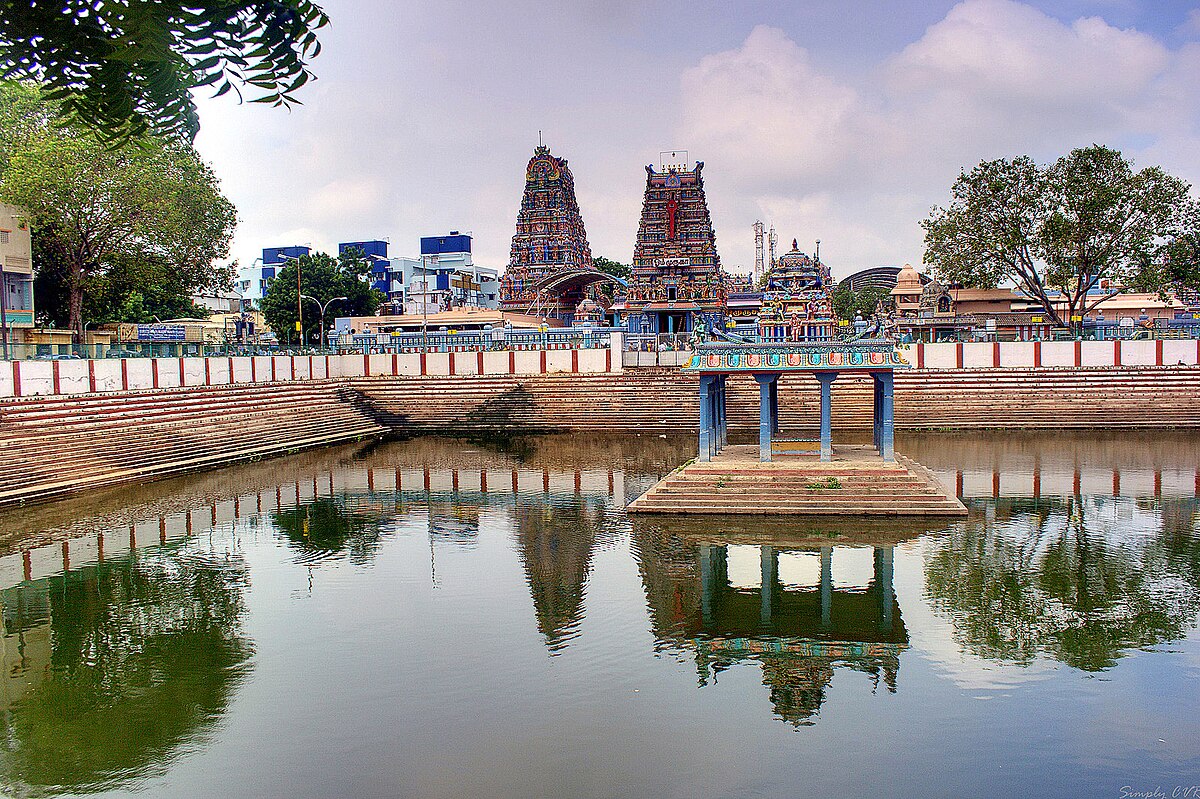
The Vadapalani temple is easily accessible since it is located on Andavar Koil Street in Chennai. You can just hire any local transport like a luxurious cab, or a ‘call taxi’ or the cheap auto rickshaws. The auto rickshaws are quite troublesome in terms of the negotiation of fares.
Many Sufiana enthusiasts from all over the world visit the dargah of Hazrat Nizamuddin Auliya, one of the most highly respected Sufi saints in India. Hazrat Nizamuddin died in 1325 and the original tomb does not exist anymore. Firuz Shah Tughlaq, an emperor of the Tughlaq dynasty, built his shrine, which underwent severe damage. In A.D. 1562-63, Fariuddin Khan, a high-ranking nobleman, rebuilt the present building. Since then, several repairs and renovations have been carried out on it. The compound also has many other tombs of nobilities like Amir Khusrau (famous poet) and Jahanara (daughter of Emperor Shah Jahan).
The Neighborhood
The dargah named after the saint divides the neighborhood surrounding it into two parts along Mathura Road: Nizamuddin West, where Muslim vendors dominate a lively market located near the Dargah complex, and Nizamuddin East, an upper-class residential area situated between Humayun’s Tomb and the Nizamuddin Railway Station.
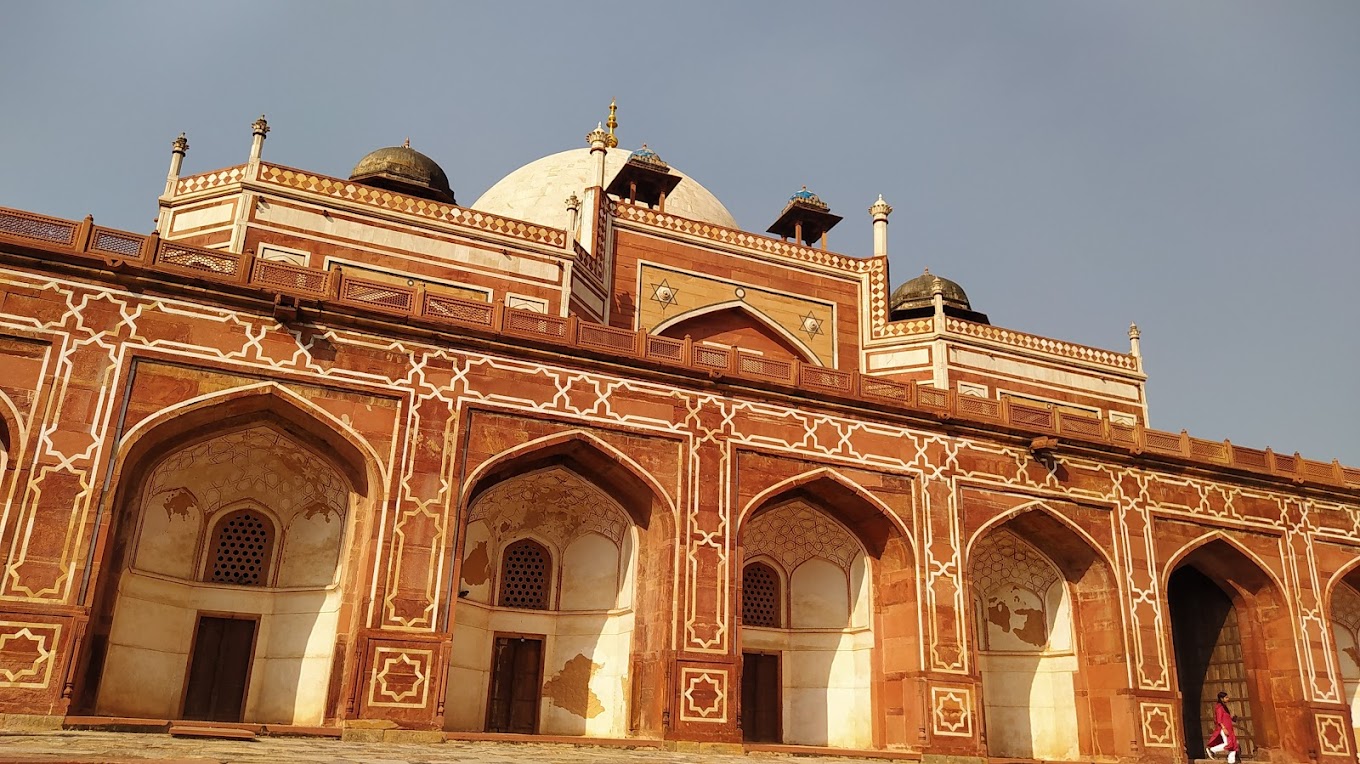
The other important monuments in the Nizamuddin heritage area include Humayun’s Tomb, Chausath Khamba, Mirza Ghalib’s tomb, Barakhamba, Sabz Burj (Blue Gumbad) at the Nizamuddin Circle and Lal Mahal.
Drug abuse, crime, and poverty remain a big problem for the neighborhood.
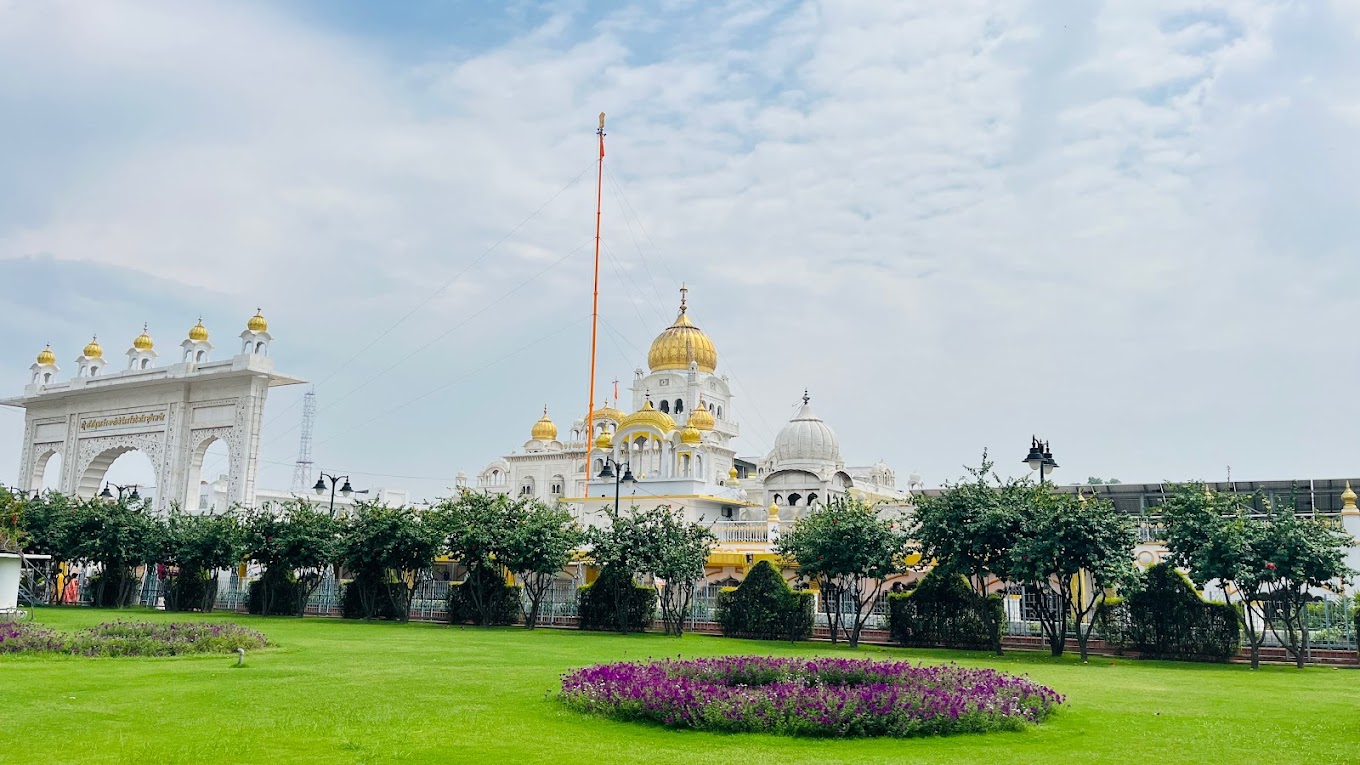
Gurudwara Bangla Sahib, associated with the eighth Sikh Guru, Guru Har Krishan, is Delhi’s most prominent Sikh gurdwara. Sikhs consider the water of the pond inside its complex, known as the “Sarovar,” to be holy and refer to it as “Amrit.” It was first built as a small temple by Sikh General, Sardar Bhagel Singh in 1783, who supervised the construction of nine Sikh shrines in Delhi in the same year, during the reign of Mughal Emperor, Shah Alam II.
It is situated near Connaught Place, New Delhi, and is instantly recognizable by its stunning golden dome and tall flagpole, Nishan Sahib.
Gurdwara Bangla Sahib
History
Raja Jai Singh, an Indian ruler in the seventeenth century, originally owned the bungalow that is now Gurdwara Bangla Sahib. Known as Jaisinghpura Palace, it was located in Jaisingh Pura, a historic neighborhood later demolished to make way for the Connaught Place shopping district.
The eighth Sikh Guru, Guru Har Krishan resided here during his stay in Delhi in 1664. During that time, there was a smallpox and cholera epidemic, and Guru Har Krishan helped the suffering by giving aid and fresh water from the well at his house. Soon he too contracted the illness and eventually died on March 30, 1664. Raja Jai Singh later constructed a small tank over the well. Sikhs worldwide now revere its water for its healing properties and take it back to their homes.
The Gurdwara and its Sarovar are now a place of great reverence for Sikhs and a place for a special congregation on the birth anniversary of Guru Har Krishan.