Ashokan Pillar (the Iron Pillar)
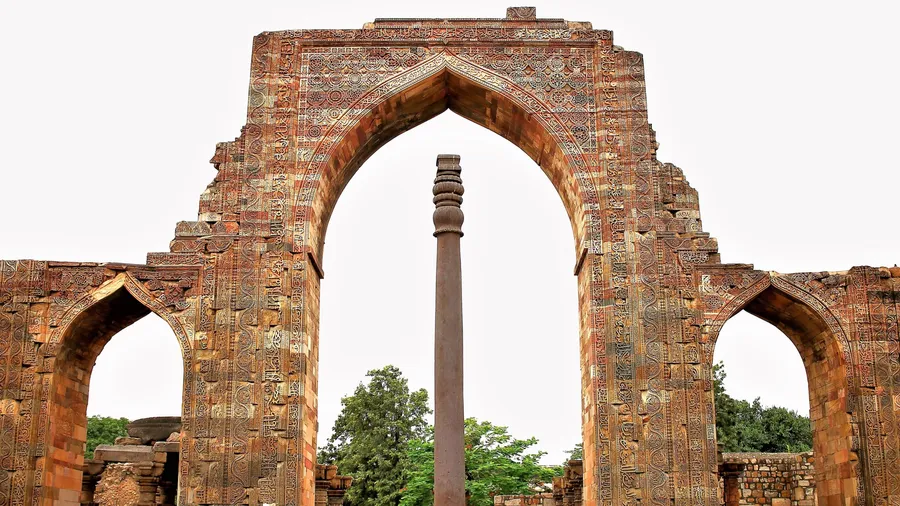
The Iron Pillar (also known as the Ashokan Pillar) of Delhi, India. It is a 7 m (23 ft) high pillar in the Qutb complex, notable for the composition of the metals used in its construction.
Scholars attribute the creation of the pillar, weighing more than six tons, to the era of Chandragupta Vikramaditya (375–413) of the Gupta Empire. Although some suggest earlier dates as early as 912 BCE. Initially, the pillar stood at the center of a Jain temple complex containing twenty-seven temples. However, Qutb-ud-din Aybak destroyed these temples. He utilized their materials in constructing the Quwwat-ul-Islam mosque and the Qutub Minar complex, where the pillar remains today.
Archaeologists and metallurgists have been drawn to the pillar. Which they deem “a testament to the skill of ancient Indian blacksmiths.” Its remarkable corrosion resistance is attributed, to both the Delhi environment and the high phosphorus content in the iron. Which forms a protective layer of crystalline iron hydrogen phosphate.