
Introduction
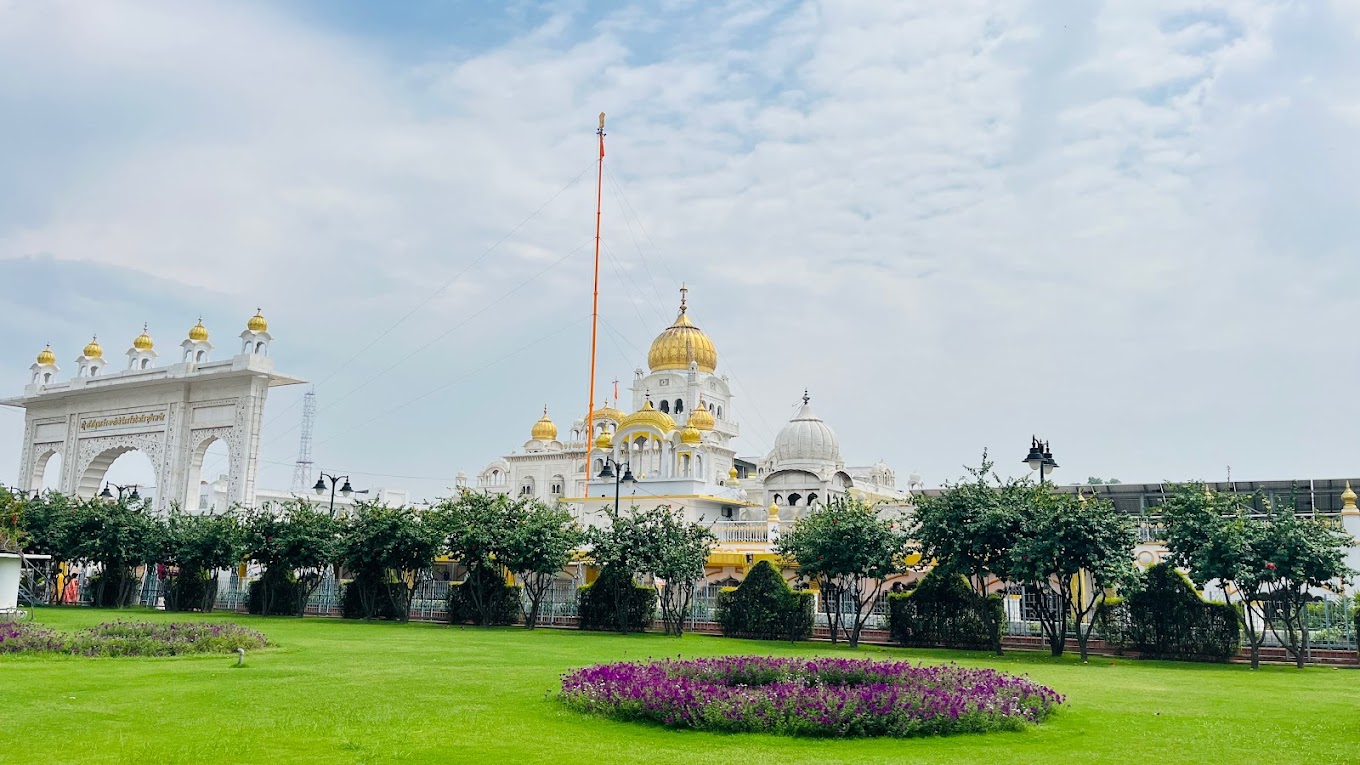
Gurudwara Bangla Sahib, associated with the eighth Sikh Guru, Guru Har Krishan, is Delhi’s most prominent Sikh gurdwara. Sikhs consider the water of the pond inside its complex, known as the “Sarovar,” to be holy and refer to it as “Amrit.” It was first built as a small temple by Sikh General, Sardar Bhagel Singh in 1783, who supervised the construction of nine Sikh shrines in Delhi in the same year, during the reign of Mughal Emperor, Shah Alam II.
It is situated near Connaught Place, New Delhi, and is instantly recognizable by its stunning golden dome and tall flagpole, Nishan Sahib.
History
Raja Jai Singh, an Indian ruler in the seventeenth century, originally owned the bungalow that is now Gurdwara Bangla Sahib. Known as Jaisinghpura Palace, it was located in Jaisingh Pura, a historic neighborhood later demolished to make way for the Connaught Place shopping district.
The eighth Sikh Guru, Guru Har Krishan resided here during his stay in Delhi in 1664. During that time, there was a smallpox and cholera epidemic, and Guru Har Krishan helped the suffering by giving aid and fresh water from the well at his house. Soon he too contracted the illness and eventually died on March 30, 1664. Raja Jai Singh later constructed a small tank over the well. Sikhs worldwide now revere its water for its healing properties and take it back to their homes.
The Gurdwara and its Sarovar are now a place of great reverence for Sikhs and a place for a special congregation on the birth anniversary of Guru Har Krishan.